
paid social
Paid Social Media Advertising in 2026: Best Platforms, Benefits, and ROI Strategies
Introduction
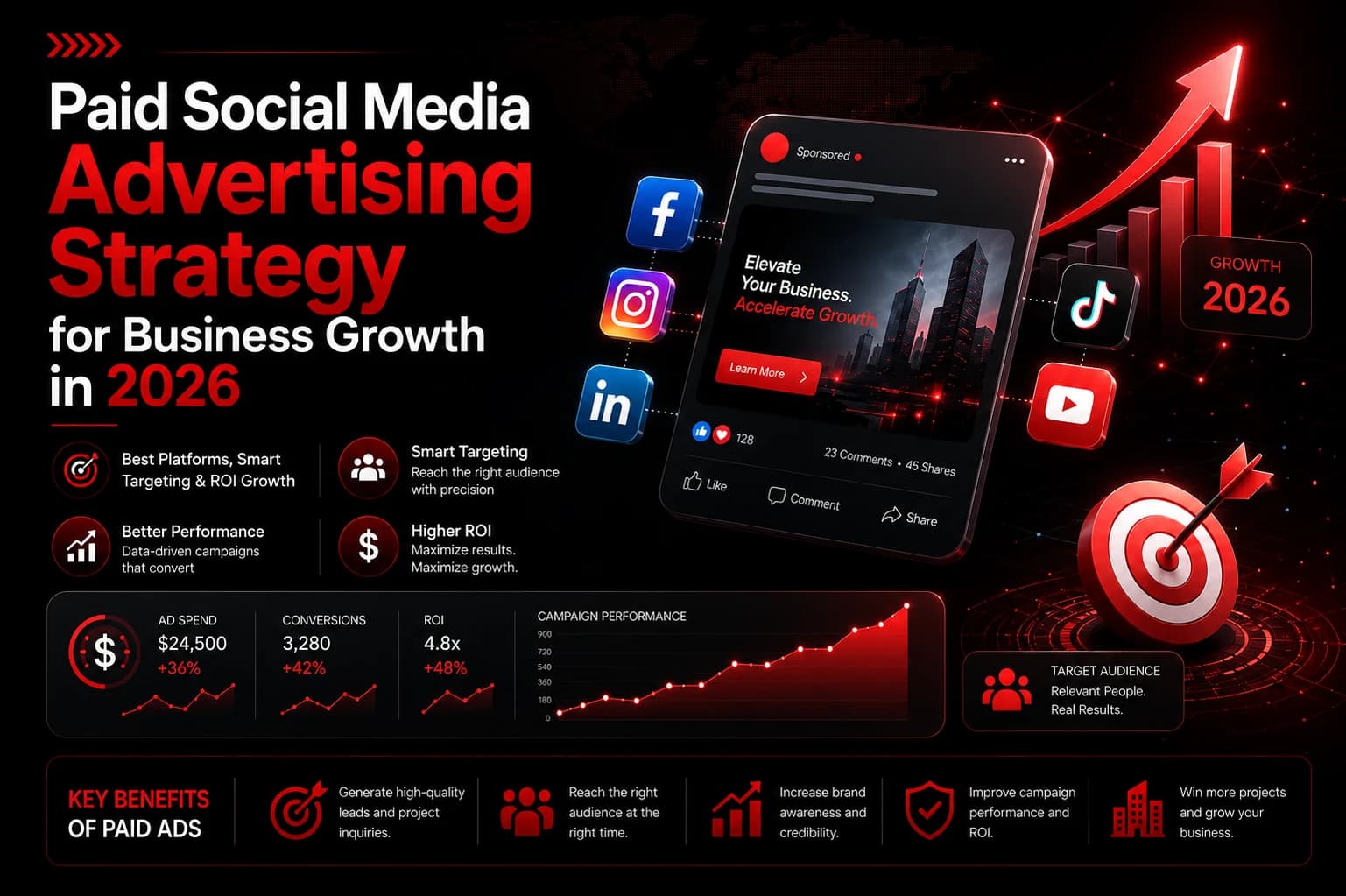
In 2026, paid social media advertising has become one of the most important tools for brands that want faster growth, stronger visibility, and measurable business results. As competition increases across every social media platform, relying only on organic reach is no longer enough for companies that want to generate leads, increase sales, and build a strong online presence.
Today, social media advertising is a key part of modern social media marketing. It allows businesses to reach specific audiences based on interests, behavior, location, demographics, and purchase intent. Instead of waiting for users to discover your brand naturally, you can use paid social ads to appear directly in front of the right audience at the right time.
This guide explains what is paid social, how advertising on social media works, and how to build an effective paid social strategy across the most important social media advertising platforms.
What Is Paid Social?
What is paid social? Paid social is a digital marketing approach that uses sponsored content and ads across social networks to reach a targeted audience. These ads can appear in feeds, stories, reels, video placements, search-related placements, and sponsored content on social media platforms.
In simple terms, paid social is a way to promote a product, service, offer, or piece of content using budget instead of relying only on organic reach. A business can launch a paid social media campaign to drive traffic, generate leads, increase engagement, or support direct sales.
Paid social media advertising can help brands move faster because it gives them control over who sees their content, how much they spend, and what action they want users to take. This is why many companies now treat paid social as a core part of their digital media strategy.
Why Social Media Advertising Matters in 2026
The digital market is crowded, and customer attention is limited. This is why social media advertising is more important than ever. Businesses need a clear way to stand out, reach relevant people, and turn attention into action.
One of the main benefits of social media advertising is precise targeting. Brands can reach people based on age, gender, interests, location, behavior, device type, and previous interactions with the business. This makes your social media advertising more efficient than broad, untargeted promotion.
Another advantage is speed. Organic content may take time to gain reach, but paid campaigns can generate traffic and results quickly. For businesses launching a new product, promoting a service, or running a seasonal offer, paid social is a great way to create momentum.
Paid Social Media Advertising vs Organic Social Media
A strong social strategy should not depend on one channel only. The best results usually come from combining paid and organic activity.
Organic social media helps brands build trust, publish valuable social content, and maintain a consistent relationship with followers. It is useful for community building, credibility, and long-term brand presence.
However, organic reach can be limited. That is where paid social campaigns become important. Paid campaigns help brands reach new audiences faster and amplify content that already performs well.
The best approach is to combine organic and paid social together. Organic content builds trust, while paid promotion expands reach. This balance helps improve visibility, engagement, and conversions.
Benefits of Social Media Advertising
The benefits of social media advertising are clear for businesses that want measurable growth. A strong campaign can help you increase brand awareness, drive website traffic, generate qualified leads, and improve sales.
Here are the main benefits:
1. Better Audience Targeting
With social media ads, businesses can target users by demographics, interests, behavior, and intent. This gives brands more control over who sees their message.
2. Faster Results
Unlike organic content, paid ads can start generating results immediately after launch. This is useful for offers, product launches, events, and lead generation.
3. Full Budget Control
Paid platforms allow you to control daily budgets, total budgets, bids, and campaign duration. This makes paid promotion suitable for both small businesses and large brands.
4. Stronger Performance Tracking
Every impression, click, lead, and conversion can be tracked. This helps businesses understand what works and what needs improvement.
5. Better Use of Your Content
If your social media posts are already performing well, you can use paid promotion to reach a larger audience. This helps increase the value of your social media content and makes your marketing more scalable.
Paid Search vs Paid Social Advertising
Paid search and paid social advertising are both important, but they work in different ways.
Paid search focuses on users who are actively searching for a product, service, or solution. For example, search ads appear when someone types a relevant keyword into Google. This makes search traffic valuable because the user already has intent.
Paid social works differently. It helps brands reach people based on interests, behavior, and discovery. Users may not be searching for the product yet, but they may still be interested when they see the right message.
A complete strategy can combine search and social media together. Search captures demand, while social creates awareness and interest. This makes the overall advertising strategy stronger.
Best Social Media Advertising Platforms in 2026
Choosing the right advertising platform depends on your business goals, audience, budget, and content style. Different social media advertising platforms offer different strengths.
Meta Ads: Facebook and Instagram
Meta Ads is one of the strongest choices for advertising on social media. It includes Facebook and Instagram, giving brands access to a wide audience across feeds, stories, reels, marketplace, and other placements.
Meta is useful for:
E-commerce brands
Real estate companies
Beauty and fashion brands
Restaurants and local services
Luxury products
Lead generation campaigns
Retargeting campaigns
Meta works well because it combines audience targeting, visual content, and flexible campaign objectives. If you want to improve your social media ads, Meta is usually one of the first platforms to test.
TikTok Ads
TikTok is one of the fastest-growing platforms for short-form video advertising. It works best when content feels natural, creative, entertaining, and native to the platform.
TikTok is useful for:
Viral product campaigns
Fashion and beauty brands
Mobile apps
Youth-focused products
Creator collaborations
E-commerce offers
Short video storytelling
For brands targeting younger audiences, TikTok can be an important part of your paid social plan.
LinkedIn Ads
LinkedIn is the strongest platform for B2B campaigns. It allows brands to target people based on job title, industry, company size, seniority, and professional interests.
LinkedIn is useful for:
B2B lead generation
SaaS companies
Consulting firms
Agencies
Professional services
Corporate branding
Recruitment campaigns
LinkedIn can be more expensive than other platforms, but it often delivers higher-quality leads for B2B businesses.
YouTube Ads
YouTube is ideal for video-based marketing. It allows brands to explain products, build trust, educate audiences, and retarget viewers.
YouTube works well for:
Product demonstrations
Tutorials
Testimonials
Brand storytelling
Educational content
High-ticket services
Long-form video marketing
YouTube can support both awareness and conversions when the message is clear and the video is strong.
Snapchat Ads
Snapchat is useful for brands targeting younger and mobile-first audiences. It works well for lifestyle, fashion, beauty, restaurants, events, entertainment, and youth-focused products.
Snapchat offers interactive formats such as AR lenses, filters, story ads, and collection ads. For brands that want visual engagement, Snapchat can be a valuable social media platform.
Google Ads, Paid Search, and Display Advertising
Although Google Ads is not a traditional social network, it plays an important role in a complete digital media strategy. Google Ads can support paid search, search ads, shopping campaigns, YouTube ads, and display advertising.
Display advertising is useful when brands want to appear across websites, apps, and visual placements. It can also support retargeting by showing ads to users who have already visited your website.
Combining Google Ads with paid social media marketing helps businesses reach users at different stages of the customer journey.
How to Build a Paid Social Media Campaign
Building a paid social media campaign requires more than choosing a platform and uploading an ad. A successful campaign needs planning, targeting, creative content, tracking, and optimization.
1. Define Your Campaign Goal
Before launching any media campaign, decide what you want to achieve. Your goal may be:
Brand awareness
Website traffic
Lead generation
Direct sales
App installs
Messages
Event registrations
Retargeting
This is a critical step because the campaign objective affects the platform, content, budget, and performance metrics.
2. Understand Your Target Audience
The success of advertising depends on reaching the right people. You need to understand your audience’s interests, problems, behavior, location, and buying intent.
The more specific your audience is, the more effective your campaign can become. Broad targeting may generate impressions, but precise targeting usually produces better results.
3. Create Strong Social Content
Strong social content is essential for campaign success. Your images, videos, headlines, and calls to action must match the platform and the audience.
For Instagram, premium visuals may work best. For TikTok, short native videos may perform better. For LinkedIn, professional and educational content is often more effective.
A good creative message helps social ads attract attention quickly and guide the user toward action.
4. Use Retargeting
Retargeting allows you to reach people who already interacted with your brand. This may include website visitors, video viewers, social engagers, cart abandoners, or previous leads.
Retargeting is powerful because warm audiences are more likely to convert. This makes it one of the most important tactics in paid social campaigns.
5. Test Different Ad Versions
A/B testing helps you understand what works. You can test different headlines, images, videos, offers, audiences, landing pages, and calls to action.
Testing is important because audience behavior changes. What works today may not work next month, so regular optimization is necessary.
6. Track Performance Metrics
To improve results with social media advertising, you need to track the right KPIs. Important metrics include:
CTR: Click-through rate
CPC: Cost per click
CPM: Cost per thousand impressions
CPA: Cost per acquisition
CPL: Cost per lead
ROAS: Return on ad spend
ROI: Return on investment
Conversion rate
Tracking these numbers helps you understand campaign performance and improve the value of your paid budget.
Best Practices for Paid Social Strategy
A strong paid social strategy combines creative quality, accurate targeting, budget control, and continuous optimization.
Here are best practices for paid social success:
Choose the right platform for your audience
Create content that feels native to each platform
Keep your message simple and direct
Use strong calls to action
Retarget warm audiences
Refresh creatives regularly
Improve landing pages
Scale only after testing
Review data weekly
An effective paid social plan does not depend on guesswork. It depends on testing, learning, and improving based on data.
Social Ads and Creative Performance
Strong creative is one of the most important parts of campaign success. Social ads are competing for attention in a fast-moving environment, so they must communicate value quickly.
A good ad should answer three questions:
What is the offer?
Why should the user care?
What should they do next?
If your social media ads are not performing well, the issue may be weak visuals, unclear messaging, poor targeting, or a landing page problem.
This is a common issue, and fixing it can improve performance significantly.
Paid Media and Budget Control
Paid media gives businesses control over spending, targeting, and results. You can start small, test different campaigns, and increase budget only when performance is strong.
The value of paid advertising is that it gives measurable feedback. You can see which platform, audience, creative, and offer delivers the best return.
This makes paid media especially useful for brands that want growth but need to manage budget carefully.
How to Improve Your Social Media Advertising Results
To improve results, focus on three main areas: audience quality, creative quality, and conversion quality.
Audience quality means reaching the right people. Creative quality means using content that captures attention. Conversion quality means making sure the user experience after the click is simple and persuasive.
If the social media content you publish organically is already performing well, use it as a guide for paid campaigns. The best organic posts often become strong paid ads when promoted correctly.
This is a great way to reduce guessing and build campaigns around proven content.
When Should You Use Paid Social?
You should use paid social when you need faster visibility, stronger reach, or measurable campaign outcomes.
Paid social is useful for:
Launching a new product
Promoting a service
Increasing website traffic
Generating leads
Growing brand awareness
Retargeting website visitors
Promoting seasonal offers
Testing new messages
For many brands, paid social is a great growth channel because it connects creative content with accurate targeting and measurable results.
Paid and Organic: Why You Need Both
A complete strategy should include paid and organic content. Organic content keeps your brand active and trustworthy, while paid campaigns help scale visibility and conversions.
The relationship between organic and paid activity is important. Organic content shows brand personality, while paid promotion helps your message reach more people.
When both work together, your strategy becomes stronger, more consistent, and more effective.
Common Mistakes in Social Media Advertising
Many brands fail with paid social because they launch campaigns without a clear plan. Here are common mistakes to avoid:
Targeting a very broad audience
Using weak creative content
Ignoring landing page quality
Not tracking conversions
Changing campaigns too quickly
Not testing enough variations
Spending too much before validating performance
Using the same content on every platform
Avoiding these mistakes can improve your campaign efficiency and reduce wasted budget.
Frequently Asked Questions
What is paid social?
Paid social is the use of sponsored content and ads across social media platforms to reach a targeted audience and achieve goals such as traffic, leads, engagement, or sales.
What is paid social media advertising?
Paid social media advertising is the process of paying to promote content, products, or services on social media. It allows businesses to reach specific audiences and measure campaign results.
What are social media advertising platforms?
Social media advertising platforms are digital channels such as Facebook, Instagram, TikTok, LinkedIn, YouTube, and Snapchat that allow businesses to run paid campaigns.
Is social media advertising effective?
Yes. Social media advertising is effective when campaigns are built around clear goals, strong creative, accurate targeting, and proper performance tracking.
What is the difference between paid social and organic social?
Organic social depends on unpaid reach, while paid social uses budget to increase visibility and reach targeted audiences. The best strategy usually combines both.
Are social media ads better than search ads?
It depends on the goal. Search ads are better for high-intent users, while social media ads are better for awareness, engagement, discovery, and retargeting.
How can paid social help my business?
Paid social media advertising can help businesses increase visibility, generate leads, drive traffic, improve engagement, and support direct sales.
What works best in paid social?
What works best in paid social is a combination of clear targeting, strong creative, relevant offers, retargeting, landing page optimization, and continuous testing.
Conclusion
In 2026, paid social media advertising is one of the most flexible and measurable tools in digital marketing. It helps businesses reach the right audience, increase visibility, generate leads, and improve sales across different platforms.
The best results come from combining strategy, creative content, targeting, and data. Brands that understand the strengths of different social media advertising platforms can build stronger campaigns and make better decisions.
A successful strategy is not only about spending money. It is about understanding the audience, testing different messages, improving the offer, tracking performance, and scaling what works.
When used correctly, advertising on social media can move users from awareness to action and help businesses achieve measurable growth.